
The Rostov Ripper: How a Soviet Serial Killer Escaped Police for 12 Years While an Innocent Man Was Executed
Andrei Chikatilo eluded Soviet investigators for 12 years. An earlier suspect was executed for a killing later removed from Chikatilo's conviction, while a flawed blood test helped free him in 1984.
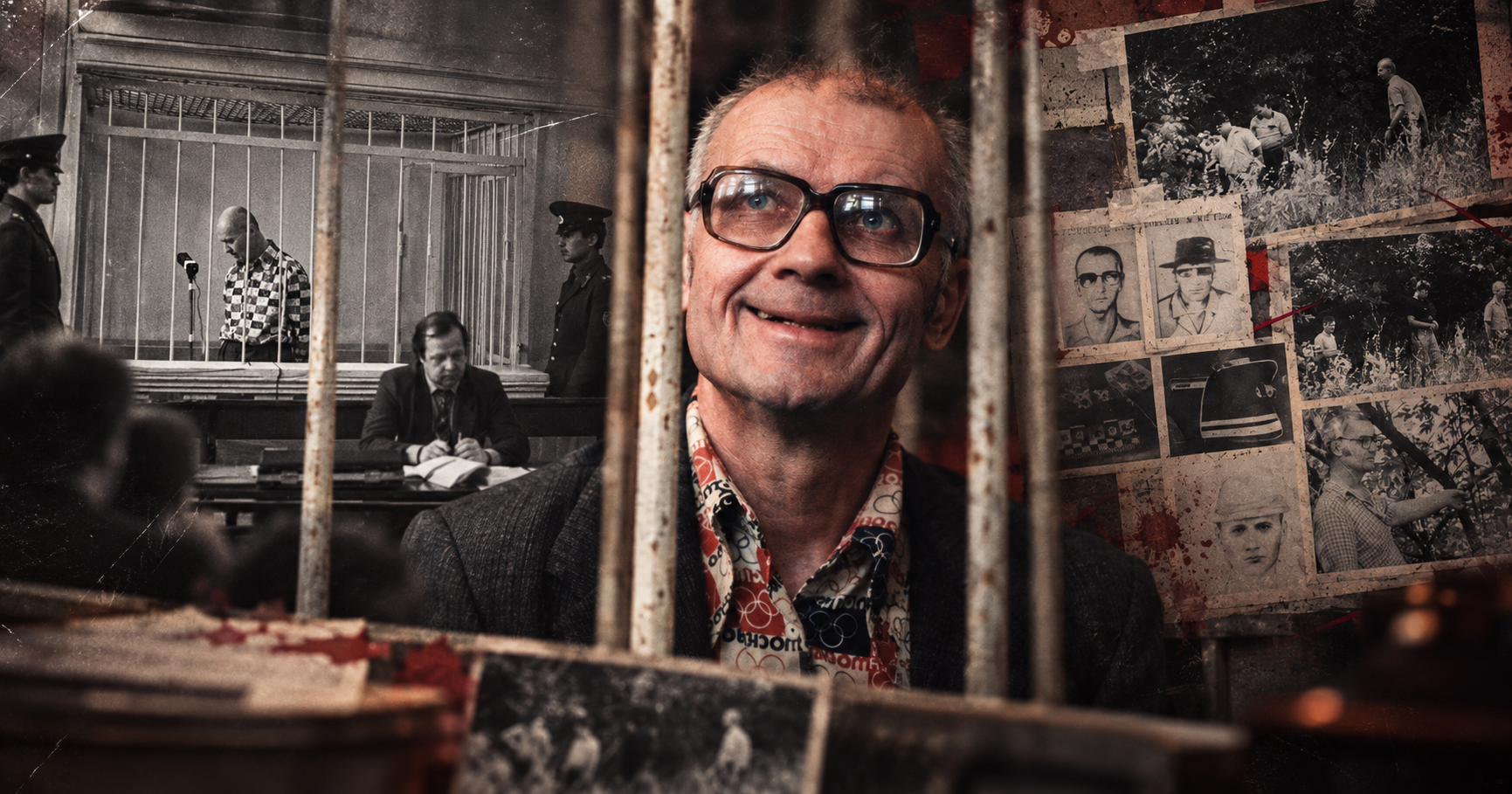
Between 1978 and 1990, Andrei Chikatilo traveled across the Soviet Union, targeting children and women near railway stations, bus stops, and wooded areas. Investigators detained him years before his final arrest but released him after a misleading forensic examination. Another man was wrongly convicted and executed for a murder Chikatilo later confessed to. The case ultimately exposed severe investigative failures, unreliable evidence, and a Soviet justice system struggling to catch one of its most prolific serial killers.
A Suspicious Man Walks Out of the Forest
On November 6, 1990, a Soviet police officer was monitoring a railway station near Rostov-on-Don, in southern Russia.
The station, located near a wooded area, was part of a railway network that investigators had been watching for months.
Several murdered women and children had been discovered in nearby forests.
That afternoon, an officer named Igor Rybakov noticed a tall, bespectacled man emerging from the trees.
The stranger appeared unusually disheveled.
He had scratches on his hands and face, and one finger was injured.
The officer stopped him and checked his identification.
His name was Andrei Romanovich Chikatilo.
There was insufficient evidence to arrest him, so he was allowed to leave. However, Rybakov recorded the encounter in an official report.
The detail became important when investigators discovered the body of 22-year-old Svetlana Korostik in the nearby woods.
She had been killed on November 6.
When police reviewed their reports, Chikatilo's name surfaced.
He had been questioned near a murder scene before.
In fact, he had been detained during the investigation six years earlier.
On November 20, 1990, officers arrested him again.
This time, investigators would uncover the criminal history of a man who had been killing for more than a decade.
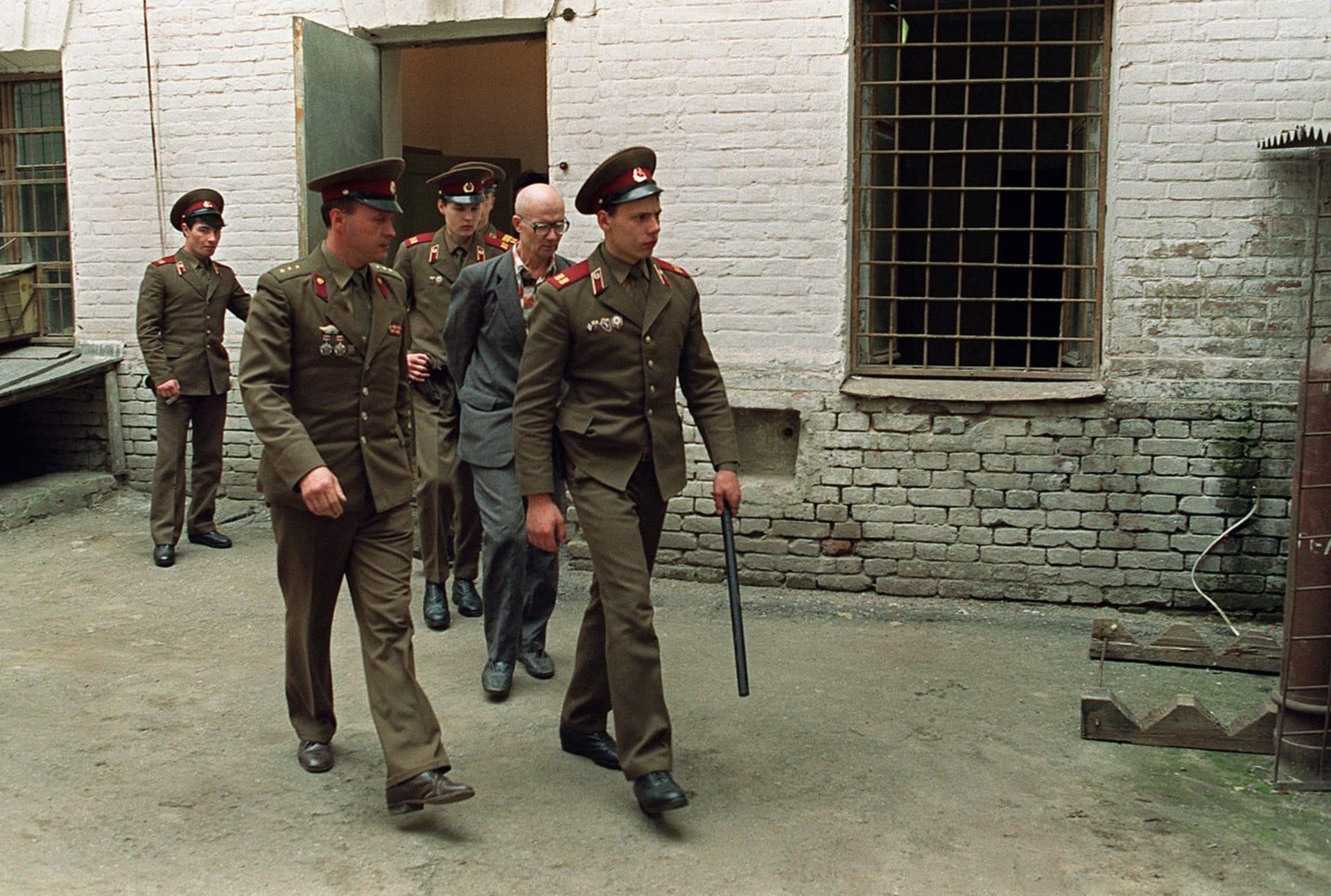
A Teacher With a Secret History
Andrei Chikatilo was born on October 16, 1936, in the village of Yablochnoye, in what is now Ukraine's Sumy region.
He grew up during a period marked by famine, war, and extreme hardship.
His family lived in poverty, and his father had been captured during World War II.
Chikatilo later described an unhappy childhood involving hunger, humiliation, and social isolation.
One of his most frequently repeated stories concerned an older brother who was supposedly kidnapped and eaten during the Soviet famine of the early 1930s.
However, researchers have not independently verified that this brother existed or that the alleged incident occurred.
The story may have been a family legend or an account that Chikatilo repeated as part of his explanation of his own past.
Whatever its origin, there is no evidence that childhood adversity inevitably leads to the kind of crimes he later committed.
As an adult, Chikatilo completed military service, joined the Communist Party, married a woman named Fayina in 1963, and became the father of two children.
He studied Russian language and literature and eventually worked as a teacher.
His professional history, however, included serious complaints.
Students accused him of inappropriate sexual conduct, and he moved between teaching positions before leaving education.
He later found work in industrial supply and procurement.
That job frequently required travel.
The movement between cities, combined with access to public transportation, became central to the murder investigation.
The 1978 Murder and the First Major Police Failure
On December 22, 1978, nine-year-old Yelena Zakotnova disappeared in Shakhty, a city near Rostov-on-Don.
Her body was discovered in the Grushevka River two days later.
Investigators initially considered Chikatilo a possible suspect.
Witness information included the description of a tall man wearing glasses who had reportedly been seen with the girl.
Chikatilo also had access to a small building in the area.
However, investigators eventually focused on another man, Alexander Kravchenko.
Kravchenko had previously served a prison sentence for a serious violent crime.
His criminal history made him an attractive suspect to police.
He was arrested, prosecuted, and ultimately sentenced to death for Zakotnova's murder.
On July 5, 1983, Kravchenko was executed.
Years later, Chikatilo confessed to killing the child.
The confession created one of the most disturbing revelations of the entire investigation: the Soviet government had executed a man for a murder that the country's most notorious serial killer was now claiming as his own.
But the legal outcome was more complicated than many later accounts suggest.
Kravchenko's conviction was overturned in 1990.
In 1993, the Russian Supreme Court also removed Zakotnova's murder from Chikatilo's conviction because the evidence against him was insufficient.
The judges examined inconsistencies in his confession, the absence of conclusive physical evidence, and forensic results that did not reliably support the accusation.
Consequently, neither Kravchenko nor Chikatilo retains a legally valid conviction for Yelena Zakotnova's murder.
Chikatilo's confession remains part of the historical record, but the specific killing is not judicially established as one of his crimes.
The outcome illustrates a fundamental failure of the original investigation: a man was executed in a case that ultimately remained legally unresolved.
Bodies Begin Appearing Along the Railway Lines
The murders that would become firmly associated with Chikatilo began in 1982.
Bodies were found near wooded areas, railway embankments, and secluded locations in southern Russia.
Many victims were children and teenagers.
Others were adult women.
Investigators noticed similarities in the methods used to attack and kill them.
The victims often had numerous stab wounds and evidence of sexual violence or mutilation.
The injuries suggested extreme brutality and an offender who repeatedly attacked isolated individuals.
Chikatilo's employment gave him opportunities to travel through different parts of the Soviet Union.
He encountered potential victims near railway stations, bus terminals, markets, and public spaces.
Sometimes he offered food or assistance.
At other times, he invented reasons for someone to accompany him to a secluded location.
The method depended less on physical force in public than on gaining someone's trust long enough to move away from witnesses.
Police initially struggled to recognize the full geographic pattern.
Murders occurred in different jurisdictions, and information sharing between investigative agencies was often inadequate.
The victims also came from different backgrounds.
Some were children from stable families. Others were runaways, homeless individuals, or people experiencing severe economic insecurity.
Investigators sometimes focused heavily on the victims' circumstances rather than the common features linking the crimes.
The geographical connections eventually became impossible to ignore.
Authorities were dealing with a serial offender who traveled extensively and understood how to use the railway system to avoid identification.
Police Arrest Chikatilo in 1984 — Then Release Him
One of the most consequential events occurred in September 1984.
Police officers in Rostov-on-Don noticed Chikatilo behaving suspiciously near transportation facilities.
He appeared to be approaching women and moving repeatedly through areas that investigators associated with the murders.
Officers followed him.
On September 13, they detained him near the city's Central Market.
According to investigative reporting and retrospective accounts, police discovered a knife, lengths of cord, and petroleum jelly in his bag.
The objects raised concerns because investigators were already searching for a violent sexual offender.
However, possession of those items did not establish that he had committed murder.
The investigation turned to forensic evidence.
Biological traces recovered from victims had been interpreted as indicating a particular blood group.
Chikatilo's blood sample appeared to show a different group.
Investigators treated the discrepancy as evidence that he could not be the killer.
He was subsequently convicted of a comparatively minor theft-related offense and released.
The decision proved disastrous.
Afterward, the murders continued.
The Blood-Type Explanation That Became a Myth
Popular retellings frequently claim that Chikatilo possessed an extremely rare biological condition causing his blood and semen to indicate different blood groups.
The explanation became known in some accounts as the Chikatilo phenomenon.
However, the scientific interpretation of the original evidence has been disputed.
Later investigators questioned whether contamination, unreliable sample interpretation, or mistakes in serological analysis produced the apparent mismatch.
A 2026 retrospective published by Kommersant emphasized that the supposed biological anomaly is not a securely established explanation for the failed identification.
The important documented fact is that investigators placed excessive confidence in a forensic comparison and excluded a suspect who later proved central to the murder series.
Chikatilo's release illustrates how misleading scientific evidence can become particularly dangerous when investigators treat an uncertain result as definitive.
Operation Lesopolosa: One of the Soviet Union's Largest Manhunts
As the number of murders increased, Soviet authorities launched an extensive investigation known as Operation Lesopolosa.
The Russian name refers to the wooded shelterbelts and tree lines where many victims had been found.
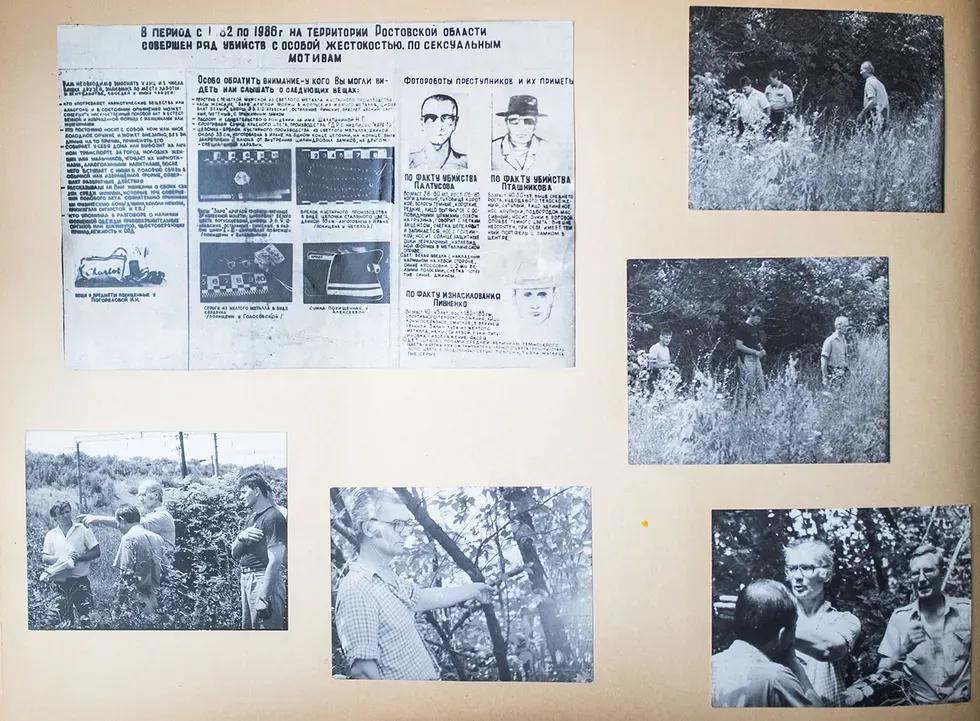
Investigators began mapping crime scenes and identifying locations where the victims were last seen alive.
A pattern emerged around suburban railway stations.
Police deployed officers to monitor stations, platforms, markets, and nearby forested areas.
Undercover personnel posed as potential victims.
Other officers watched trains and searched wooded locations where bodies had previously been discovered.
The investigation involved enormous resources.
Contemporary reporting described hundreds of thousands of interviews and the examination of numerous suspects.
The operation also uncovered other criminal offenses unrelated to Chikatilo.
But the central target remained unidentified for years.
The Rostov regional prosecutor's historical account describes how investigators gradually established that the killer frequently used short-distance trains and selected victims near suburban stations.
It also documents an incident in which medical students noticed an older man attempting to persuade a boy traveling alone to leave a train with him.
The man disappeared into a station crowd before he could be identified.
That report contributed to the developing understanding of the offender's behavior.
Eventually, the investigation concentrated more heavily on the railway corridors.
The effort would finally bring officers into contact with Chikatilo again.
A Psychiatrist Helps Break the Silence
Following his November 20, 1990, arrest, Chikatilo initially denied responsibility for the killings.
Investigators faced a problem.
They believed they had identified their suspect, but they needed evidence capable of connecting him to individual murders.
They also had limited time to hold him without formally establishing charges.
Authorities turned to psychiatrist Alexander Bukhanovsky.
Bukhanovsky had previously assisted investigators by developing a psychological profile of the suspected killer.
His assessment addressed the offender's likely behavioral characteristics and the psychological motivations underlying the crimes.
During the interrogation, Bukhanovsky spoke with Chikatilo about his personal history and psychological condition.
According to Interfax and subsequent interviews with investigators, the conversation helped persuade Chikatilo to discuss the murders.
The suspect began providing detailed accounts.
He also described killings that police had not previously connected to the ongoing investigation.
Some of the information led investigators to previously undiscovered remains.
That was important because a confession alone could not establish the truth of every allegation.
Details that could be independently corroborated carried far greater evidentiary value.
Accounts from investigators differ over precisely who elicited the first confession and the respective roles of Bukhanovsky and senior investigator Issa Kostoyev.
Nevertheless, Bukhanovsky's involvement is firmly documented and remains one of the most notable early uses of psychiatric profiling in a major Soviet serial-murder investigation.
The Numbers: 56 Confessions, 53 Charges, 52 Convictions, and 43 Upheld Murders
The Chikatilo case is frequently described using conflicting victim counts.
The differences arise from separate stages of the investigation and judicial process.
Chikatilo reportedly confessed to as many as 56 murders, although some investigative accounts mention 55.
Prosecutors ultimately brought 53 murder allegations.
During the October 1992 trial, the Rostov Regional Court convicted him of 52 murders.
International media and Amnesty International reported that figure at the time.
But the story did not end with the original judgment.
On June 30, 1993, the Russian Supreme Court reviewed the verdict.
The court removed nine murder counts because the evidence was insufficient to support the convictions.
This included Zakotnova's 1978 murder and eight other cases.
The judges emphasized that confessions had been relied upon without adequate independent corroboration.
The appellate ruling left 43 judicially established murder convictions while maintaining the death sentence.
This distinction is particularly important when evaluating popular articles that refer to 53 or 56 confirmed victims.
Those figures are not equivalent to the final number established through the judicial process.
The actual number of people Chikatilo killed may have exceeded 43, but a criminal accusation or confession cannot automatically be treated as proof.
The Trial That Horrified Russia
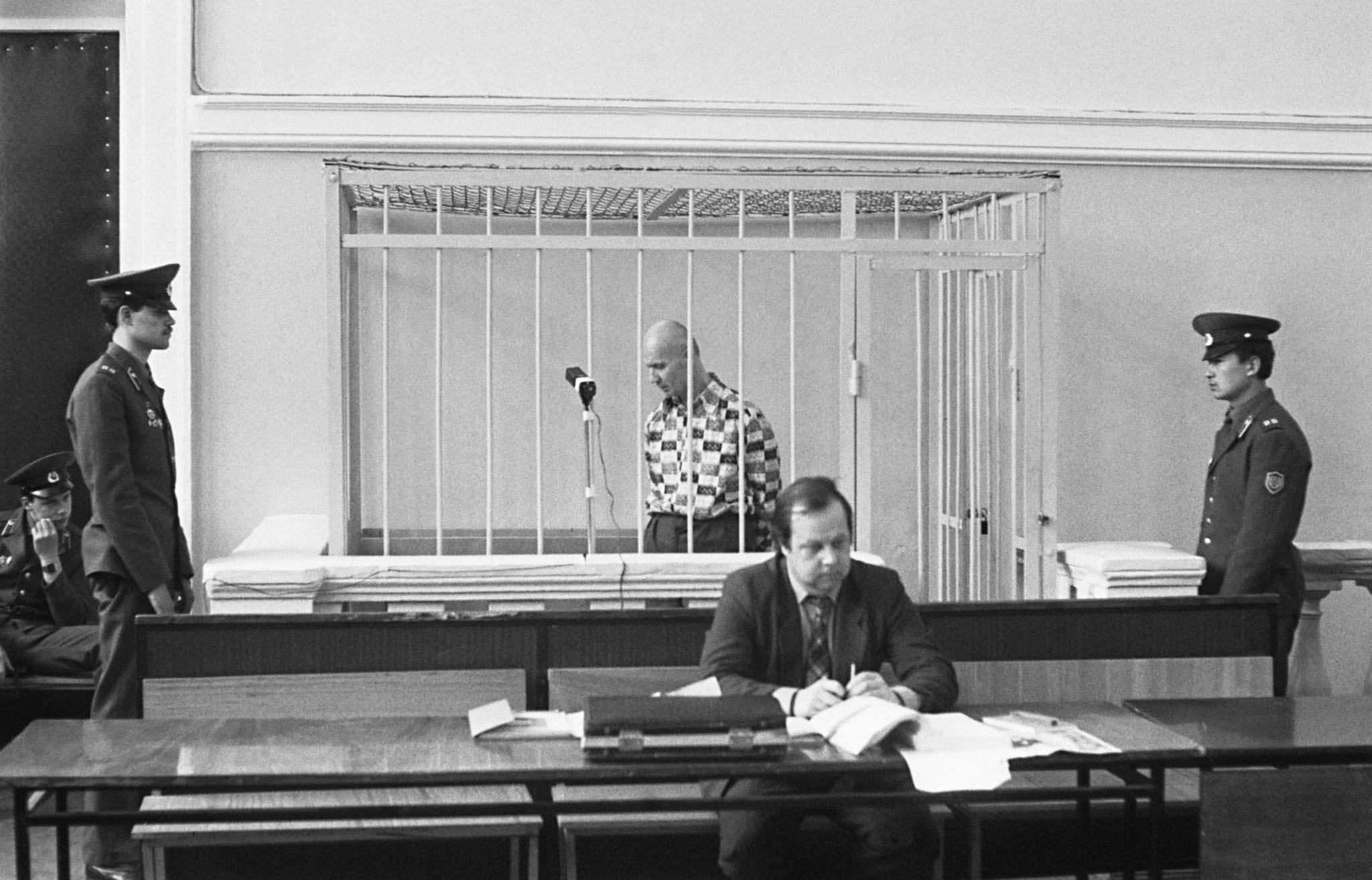
Chikatilo's trial began in April 1992 in Rostov-on-Don.
The proceedings lasted for months and attracted extensive public attention.
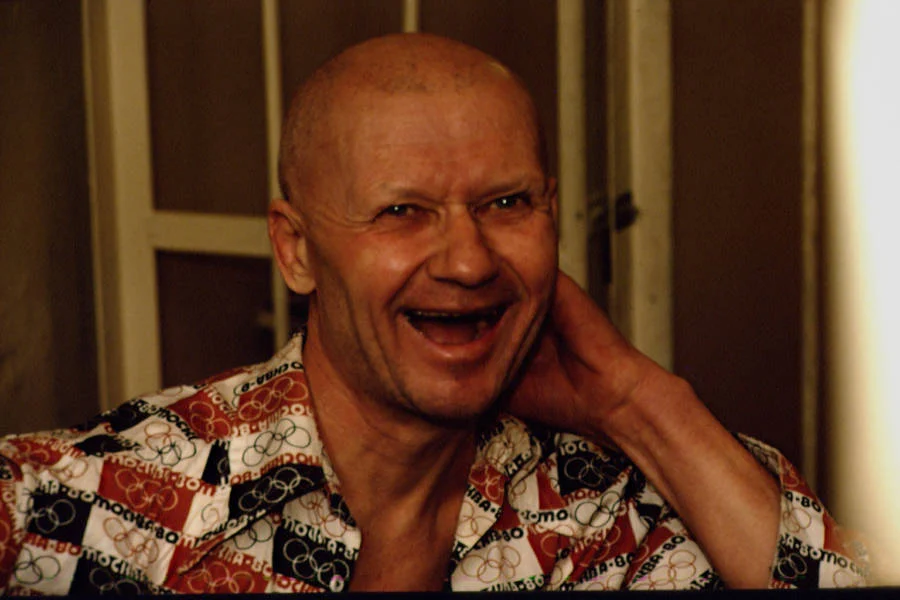
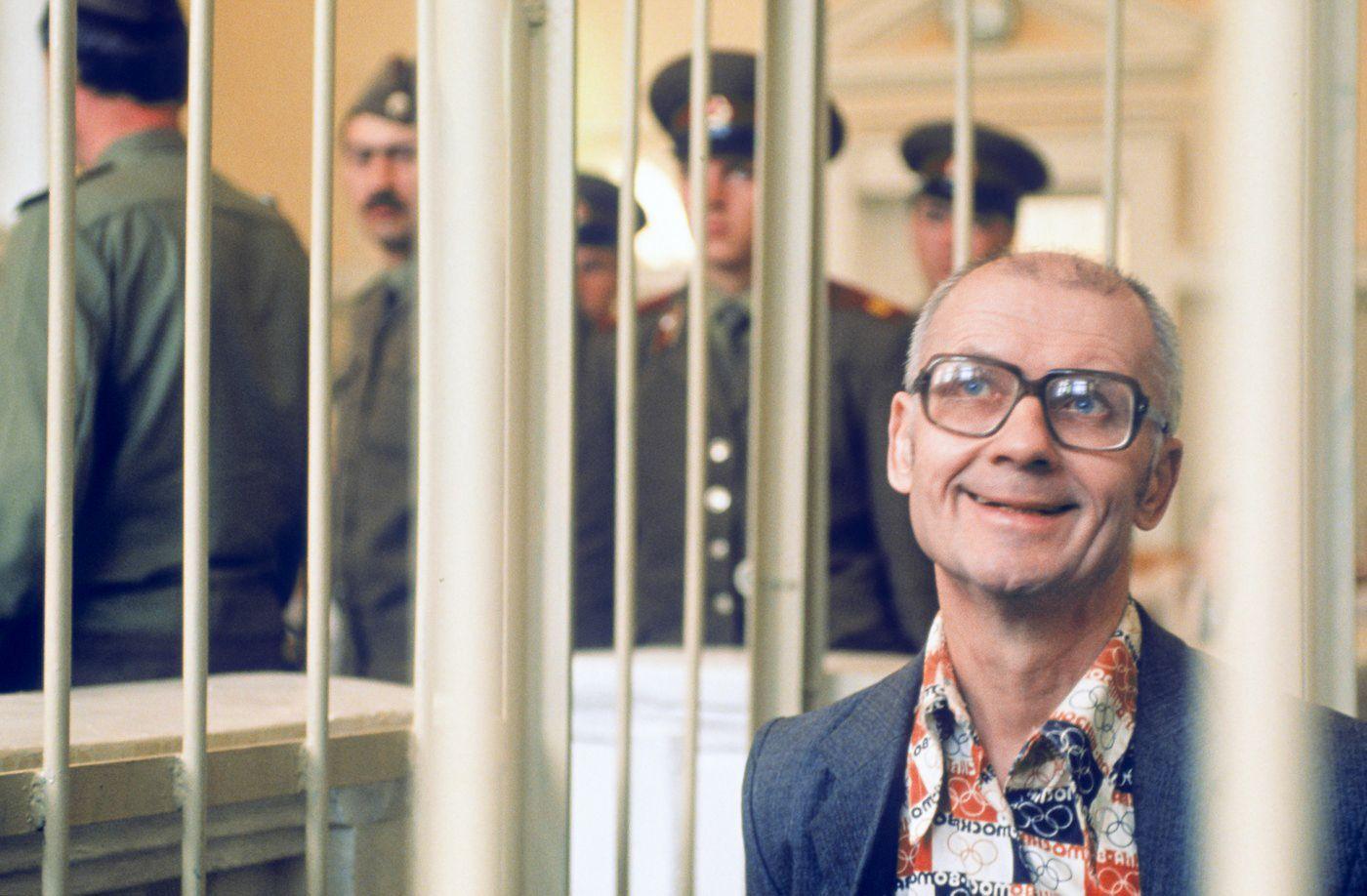
He was confined inside a metal cage in the courtroom.
The arrangement separated him from spectators, including relatives of victims who were understandably furious about the killings.
Court proceedings became chaotic at times.
Chikatilo shouted, interrupted the hearings, and behaved erratically.
He also made bizarre statements and engaged in disruptive conduct that appeared inconsistent with his formerly subdued public personality.
The psychiatric assessments nevertheless concluded that he was legally responsible for his actions and fit to stand trial.
The defense disputed those findings.
Witness testimony and forensic evidence described a series of killings that had taken place across Soviet territory during the final years of the USSR.
On October 14, 1992, the court announced the guilty verdict.
The following day, Chikatilo received a death sentence.
The judge was Leonid Akubzhanov.
The proceedings also highlighted the emotional devastation experienced by victims' families.
Many relatives had waited years for answers.
Some had endured long periods in which police provided little information about missing children.
Others learned details of the killings only when the evidence was read publicly in court.
The trial was not simply a public spectacle involving a notorious criminal.
It was the culmination of investigations into the deaths of dozens of people whose families had spent years searching for an explanation.
The Execution of Andrei Chikatilo
Chikatilo appealed his conviction and sentence.
The June 1993 Supreme Court ruling reduced the number of established murders but upheld the death penalty.
His subsequent appeal for clemency was also unsuccessful.
On February 14, 1994, Chikatilo was executed by gunshot at a prison in the Rostov region.
He was 57 years old.
The execution occurred approximately three years and three months after his final arrest.
The case subsequently became the subject of books, documentaries, films, and extensive studies of serial criminal behavior.
One of the best-known adaptations was the 1995 film Citizen X, which dramatized the police investigation and the institutional difficulties involved in tracking the killer.
However, dramatizations often simplify the timeline, change details for narrative purposes, and emphasize a few investigators while minimizing the contributions of others.
The surviving court documents provide a more complicated picture of the case.
How Did the Soviet System Fail to Stop Him?
Several failures contributed to the length of the investigation.
First, police did not initially recognize the murders as parts of one extensive series.
Second, investigative information was dispersed across different regions and agencies.
Third, the authorities were working within a system that lacked substantial experience investigating highly mobile serial sexual offenders.
Fourth, some investigators relied on assumptions about victims and suspects that directed attention away from other possibilities.
Fifth, the mistaken interpretation of forensic results helped Chikatilo avoid prosecution after his 1984 detention.
Finally, the Zakotnova investigation demonstrated the danger of pursuing a conviction when the available evidence does not support one.
Kravchenko's execution remains an especially serious example of irreversible judicial error.
The investigation also demonstrates the limits of confessions.
Even Chikatilo's admissions were not sufficient to establish guilt in every case he claimed.
The Russian Supreme Court's decision to remove nine murder counts recognized that evidence must be corroborated independently.
Those shortcomings were not minor administrative problems.
They affected whether the correct person was identified, whether innocent people were punished, and how long a dangerous offender remained free.
The Most Disturbing Part of the Chikatilo Case
Andrei Chikatilo's crimes were extraordinarily violent.
But the most important historical lesson is not the detailed brutality of individual murders.
It is the sequence of investigative decisions surrounding them.
A young girl was murdered in 1978, and another man was executed for the crime.
A suspect was detained in 1984 but released partly because forensic evidence was misinterpreted.
The same man continued traveling across Soviet territory while more victims were killed.
Only in November 1990 did investigators connect him to the broader series strongly enough to make a lasting arrest.
He subsequently confessed to numerous killings, but nine murder convictions were removed on appeal because the confessions were not adequately supported.
The final legal record established 43 murders.
The Chikatilo investigation remains a disturbing example of how criminal behavior can continue when police intelligence, forensic methods, and the judicial system repeatedly fail to operate effectively.
The most frightening detail is that authorities had detained the killer years before his final arrest — and then allowed him to return to the same railway stations and wooded areas where the murders continued.

Jude Cassian
Jude Cassian tracks the strange, dark, unexplained, and absurd corners of the world with independent curiosity and no political or religious spin.
Suggested Articles You Might Enjoy
Prison Authority with Epaulettes
Russian soviet criminal elite have specific tattoos, language, and codes of conduct, and are feared by law enforcement and other criminals.
A Killer Who Turned Victims into Commodities
Discover the chilling true story of Joe Metheny, a Baltimore serial killer who murdered and served his victims as meat in his roadside barbecue stand
Gop-stop (гоп-стоп)
In fact, the expression gop with a click is associated with the criminal specialty of street robbers
Leave a comment