
The Ghosts of Stones River Battlefield and the Headless Soldier of Murfreesboro
Stones River Battlefield has long inspired reports of phantom soldiers and a headless rider. Its Civil War history is documented; the reported encounters and recordings remain unverified.
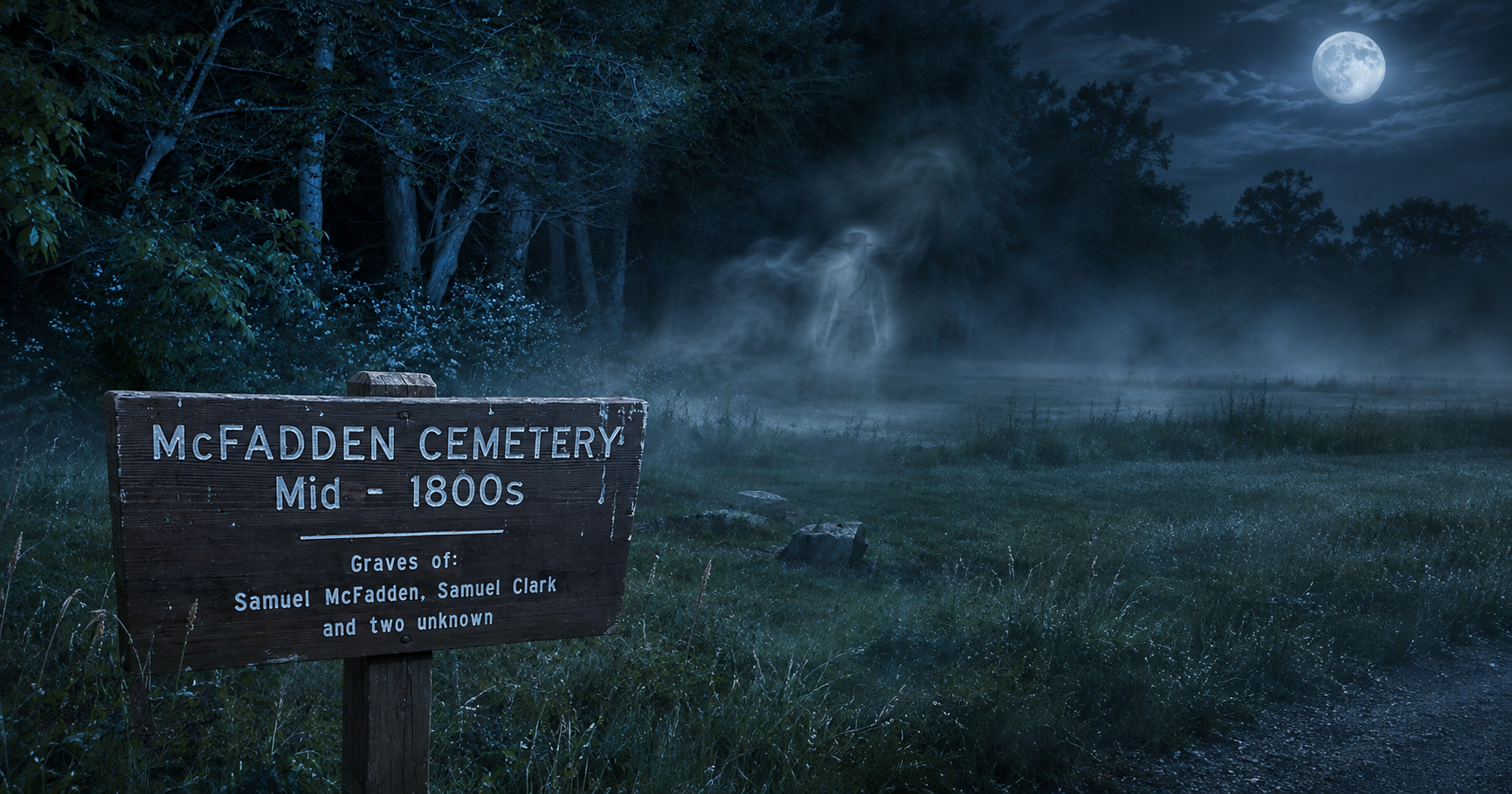
More than 160 years after one of the Civil War's bloodiest battles, residents and paranormal investigators continue reporting mysterious gunfire, phantom soldiers, unexplained voices, and a headless horseman near the Stones River Battlefield in Murfreesboro, Tennessee. Some of the stories involve real historical figures whose deaths are documented. Others remain unexplained encounters without independently verified evidence.
Soldiers Are Still Reportedly Walking the Battlefield
Visitors to Stones River National Battlefield in Murfreesboro, Tennessee, sometimes report experiences that have little to do with the historic cannons, monuments, and preserved Civil War trenches.
Some claim to have heard footsteps following them through the cedar trees.
Others describe distant gunfire or the sound of horses moving across apparently empty ground.
There are also reports of figures dressed in nineteenth-century military uniforms appearing briefly before disappearing.
The location's supernatural reputation attracted renewed attention on October 29, 2020, when Nashville television station WKRN published an investigation titled Soldiers and Spirits Haunt Stones River Battlefield in Murfreesboro.
Reporter interviews included author Allen Sircy and paranormal investigator Mark Walsh, both of whom had collected stories about unusual activity around the battlefield.
Walsh, associated with Rutherford County Paranormal Investigations, described numerous visits to the historic site.
He reported hearing sounds resembling cannon and musket fire and seeing figures he believed were soldiers walking across the battlefield.
Walsh also claimed that during attempts to communicate with supposed spirits, he repeatedly received responses identifying Abraham Lincoln as the president.
Those accounts were presented as paranormal experiences, not verified historical recordings.
Nevertheless, Stones River's reputation as a haunted location began long before the 2020 television report.
Some stories can be traced back decades.
The Battle That Killed More Than 3,000 Men
The documented history behind the haunting legends begins on December 31, 1862.
Union Major General William S. Rosecrans had marched his Army of the Cumberland from Nashville toward Murfreesboro, where Confederate General Braxton Bragg and his Army of Tennessee had established a defensive position.
Both commanders planned to attack.
Bragg struck first.
At dawn on New Year's Eve, Confederate troops launched a major assault against the Union right flank, forcing thousands of Federal soldiers to retreat.
Some Union formations were overwhelmed.
Others held their positions through repeated attacks.
The fighting continued across rocky fields, wooded areas, roads, and farms surrounding Murfreesboro.
On January 2, 1863, Confederate soldiers launched another major assault near Stones River.
Union artillery devastated the attacking formations.
Bragg eventually withdrew his army, giving Rosecrans a strategically important victory.
According to the National Park Service, approximately 81,000 soldiers participated in the battle.
The combined casualty total exceeded 23,000.
That figure includes killed, wounded, missing, and captured soldiers. It does not mean 23,000 people died.
More than 3,000 men were killed, while nearly 16,000 were wounded.
Some injured soldiers remained on the battlefield for days before receiving assistance.
The fighting was so severe that survivors gave particular locations names that are still used today.
Two of them became closely associated with the battlefield's ghost stories.
The four Ghost Research Society recordings embedded throughout this article contain sounds the investigators interpreted as voices or other activity. Those interpretations are not independently verified evidence of a haunting.
The Slaughter Pen and the Sounds of Invisible Soldiers
One of the best-known locations is the Slaughter Pen.
This section of the battlefield contains limestone formations, cedar trees, and natural depressions that provided partial protection during the fighting.
On December 31, Union soldiers under Generals Philip Sheridan and James Negley resisted repeated Confederate attacks.
The terrain made troop movements difficult.
Communication broke down, and soldiers fought at close range among the rocks and trees.
The National Park Service records that all three of Sheridan's brigade commanders were killed or mortally wounded.
Many units suffered catastrophic losses.
Union survivors compared the scene to the slaughter pens of Chicago's stockyards.
The name remained.
Today, the Slaughter Pen is also one of the areas where visitors and paranormal investigators have reported unexplained sounds, unusual sensations, and apparent apparitions.
Mark Walsh told WKRN that his group had repeatedly experienced what they interpreted as supernatural activity in the vicinity.
Other paranormal accounts describe shadow-like figures moving among the rocks and trees.
The reports are difficult to verify.
The landscape itself contains uneven ground, dense vegetation, and limestone formations that can make the movement of animals or other visitors difficult to observe.
None of the published accounts establishes that actual Civil War soldiers have appeared there.
But the area's historical association with intense fighting is firmly documented.
The Headless Horseman of Stones River
Perhaps the most recognizable ghost story connected to the battlefield concerns Lieutenant Colonel Julius Peter Garesché.
Unlike many anonymous figures in battlefield folklore, Garesché was a real Union officer whose death was recorded in historical accounts.
He was a West Point graduate and served as chief of staff to General William Rosecrans.
On December 31, 1862, Garesché was riding with Rosecrans near the Round Forest, close to the Nashville and Chattanooga Railroad.
A Confederate artillery round passed dangerously close to the general.
The projectile struck Garesché in the head, killing and decapitating him.
According to historical accounts, his body remained on horseback for approximately 20 paces before falling to the ground.
General William Hazen later found Garesché's remains and recovered personal belongings, including his West Point ring and a devotional book.
His body was initially buried near the battlefield and subsequently reinterred in Washington, D.C.
The circumstances of his death became particularly famous because of accounts that Garesché believed he would die in battle.
Local historical writings describe conversations with his brother Frederick, who reportedly believed an earlier near-fatal experience was an omen of his brother's eventual death.
Those premonition stories are part of the historical narrative surrounding Garesché, although their supernatural implications are a matter of interpretation.
After the Civil War, another story developed.
Some people claimed that Garesché's headless figure could still be seen near the railroad tracks and cemetery.
Others reported a headless rider moving across portions of the former battlefield.
In 2009, journalist Mike West documented the legend for The Murfreesboro Post.
Four years later, Dan Whittle wrote another article examining reports of Garesché's ghost.
Veteran park employee Bill Reese said that Garesché was among the most frequently discussed apparitions, particularly around Halloween.
The actual artillery death is established history.
The claims that Garesché continues riding the battlefield without his head are folklore, unsupported by independently verified physical evidence.
The Civil War Figure Who Disappeared in Front of a Witness
Another reported encounter dates to 1978.
Jeffrey T. Leathers was then a Middle Tennessee State University student participating in Civil War reenactments.
According to an account later published in The Murfreesboro Post, Leathers was camping near the battlefield with fellow reenactors.
During the night, he discovered that his canteen was empty.
He walked toward a park building to refill it.
As he traveled through the area, he reportedly noticed a figure standing near some bushes.
The person appeared to be wearing a Civil War-era uniform.
Leathers initially assumed another reenactor was playing a prank.
He called out for the person to reveal himself.
The figure reportedly moved toward him, raising its hands.
Feeling threatened, Leathers warned the approaching person to stop.
According to the story, the figure suddenly dropped from view and disappeared.
Leathers searched the area but reportedly found no footprints or disturbed vegetation indicating where the person had gone.
The experience became part of the battlefield's local ghost lore.
Leathers later worked at Stones River National Battlefield, according to the 2013 account.
His experience was also discussed in older paranormal publications.
However, no contemporaneous photograph, independently authenticated recording, or other physical evidence establishes what he saw.
A real person, a misperception in darkness, or another ordinary explanation cannot be excluded.
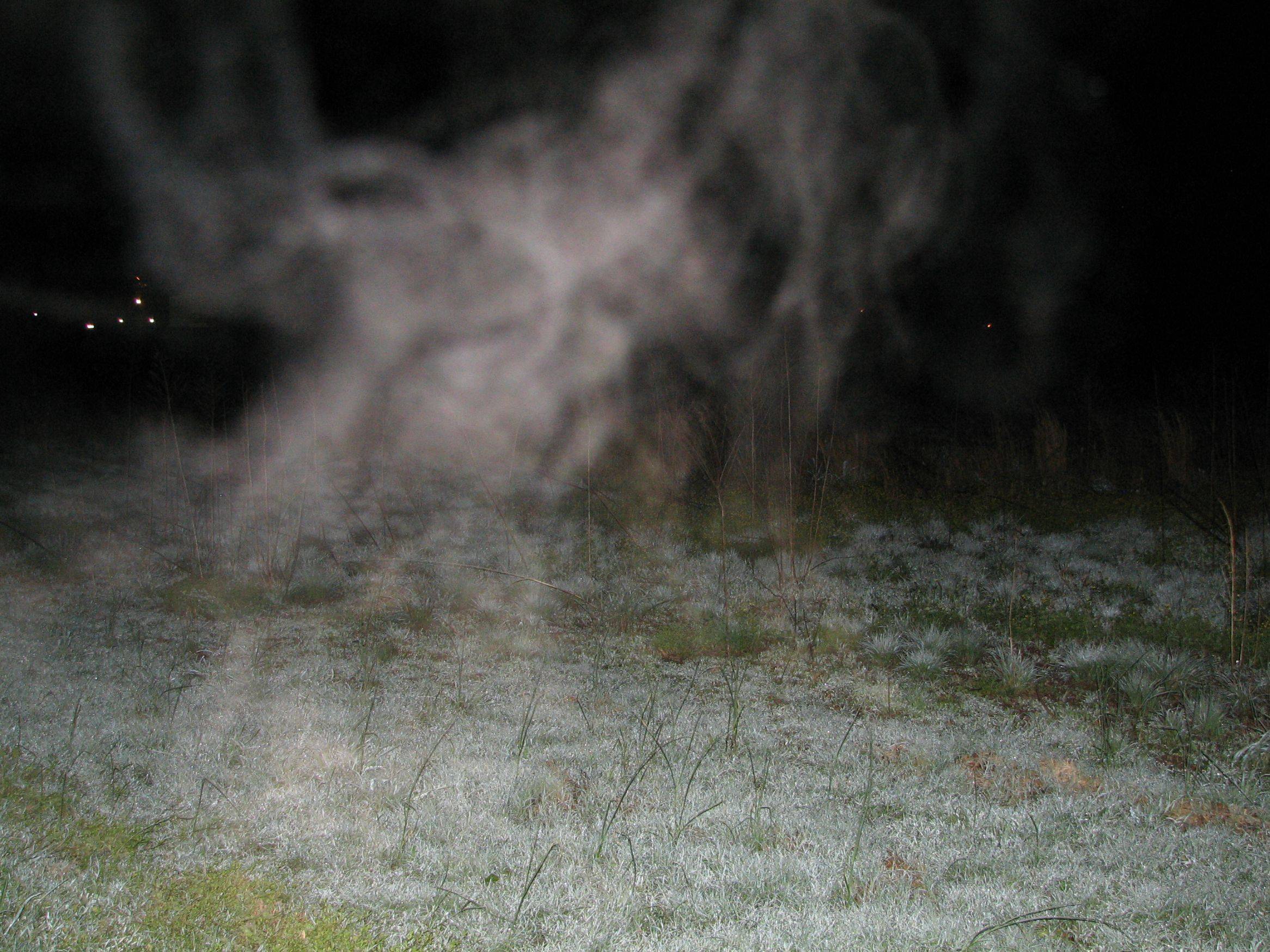
Another Reported Encounter Involving a Sheriff's Deputy
The battlefield also appeared in the television series Paranormal Emergency.
An episode recounted an alleged experience involving Rutherford County Sheriff's Deputy Matt King in November 2014.
According to the account reproduced by the Ghost Research Society, King was completing paperwork near the battlefield during the early morning hours.
He reportedly heard sounds resembling gunfire and cannon blasts.
Then he noticed a human figure in the distance.
The person appeared to be wearing a Confederate uniform.
King approached, initially believing someone might need assistance.
The story becomes more extraordinary at this point.
The deputy reportedly described the figure moving toward him before experiencing what he interpreted as a sudden vision of Civil War combat.
He believed he had experienced the final moments of a soldier's life.
The incident was subsequently dramatized for television.
However, the available published material does not include an independently authenticated police incident report, original recording, or physical evidence documenting a supernatural encounter.
The Ghost Research Society later attempted to arrange an interview with King while planning an investigation.
According to its published account, the investigators were unable to meet with him.
The story therefore remains an account presented through paranormal television and subsequent retellings.
Strange Activity Beyond the National Battlefield
Not every reported haunting occurs inside the protected national park.
The Battle of Stones River covered a much larger area than the land currently preserved by the National Park Service.
Over the decades, Murfreesboro expanded across former farmland and other locations associated with the fighting.
Roads, commercial developments, residential neighborhoods, and industrial properties now occupy portions of the historic landscape.
In the 2020 WKRN report, local author Allen Sircy discussed unusual experiences associated with businesses around Medical Center Parkway.
Sircy had published Southern Ghost Stories — Murfreesboro, Spirits of Stones River, a collection of local supernatural accounts.
He reported speaking with employees who believed they had encountered unexplained activity at their workplaces.
One account involved a storage facility where a worker thought an unseen Union soldier was interfering with motion-controlled lighting on an upper floor.
Another involved a convenience store employee who reportedly heard someone calling her name while she was working alone near a cooler.
Sircy also described apparently unexplained audio captured while interviewing a storage facility employee.
Some residents of the Riverview area have similarly reported figures resembling soldiers moving through homes or appearing unexpectedly nearby.
Other local accounts mention the smell of cigar smoke in commercial buildings when no obvious source can be identified.
The reports are not accompanied by publicly available forensic investigations establishing a paranormal cause.
Sircy's interpretation connects the experiences to the battlefield's history, including the use of buildings in the surrounding community as temporary wartime hospitals.
Specific claims about what occupied any modern commercial parcel in 1862 require independent examination of historical land records and maps.
The fact that a neighborhood lies near a Civil War battlefield does not establish that every building on it occupies a former hospital or burial ground.
Investigators Return in June 2020
On June 4, 2020, members of the Ghost Research Society visited Stones River National Battlefield.
The group included Dale Kaczmarek, Mike Rosario, Kelly Griffey, and investigators from the Crawford County Illinois Ghost Hunters Society.
They brought handheld equipment, cameras, and audio recorders.
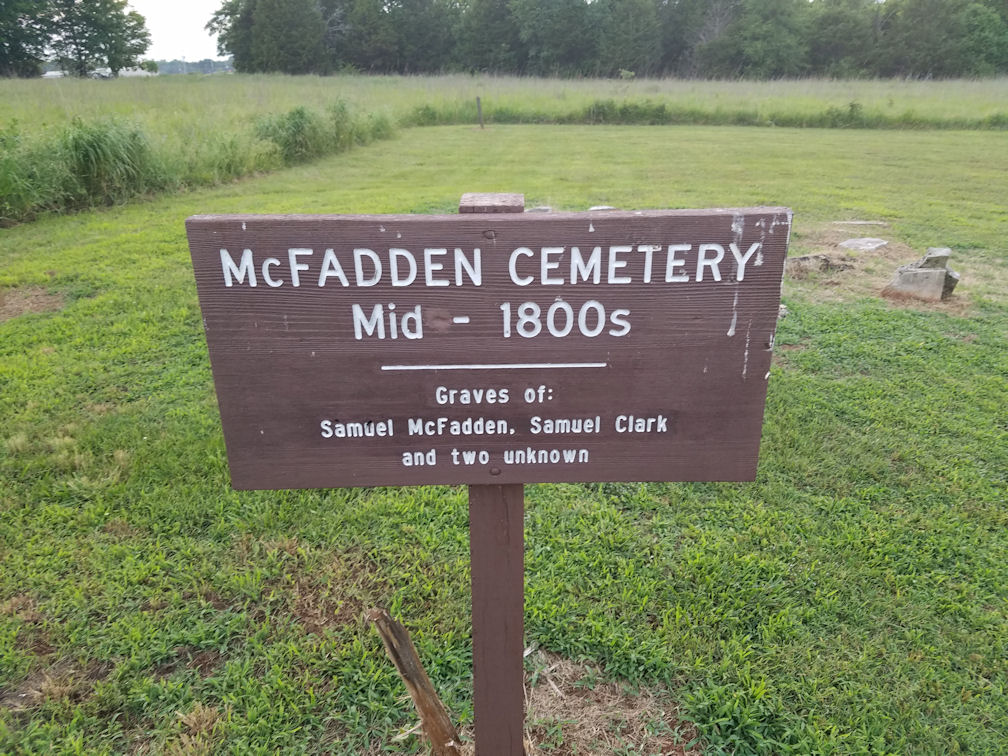
The team visited multiple locations, including areas near the Slaughter Pen, Hazen Brigade Monument, Stones River National Cemetery, and McFadden Farm.
They attempted electronic voice phenomenon recordings, commonly called EVPs.
Some team members reported hearing unusual sounds or identifying possible words in electronically generated audio.
Kaczmarek also reported seeing what looked like a dark silhouette near a tree.
However, the team acknowledged uncertainty about the observations.
One investigator described a distant shape in a photograph that might simply have been a marker, bush, or tree.
Mike Rosario reported that his own equipment had captured no convincing visual or audio evidence during the visit.
The group also encountered difficulty identifying the exact location of the previously reported deputy's experience.
Its findings were therefore inconclusive.
The investigation is significant because the team's own report included both unusual observations and explicit admissions that some apparent anomalies could have ordinary explanations.
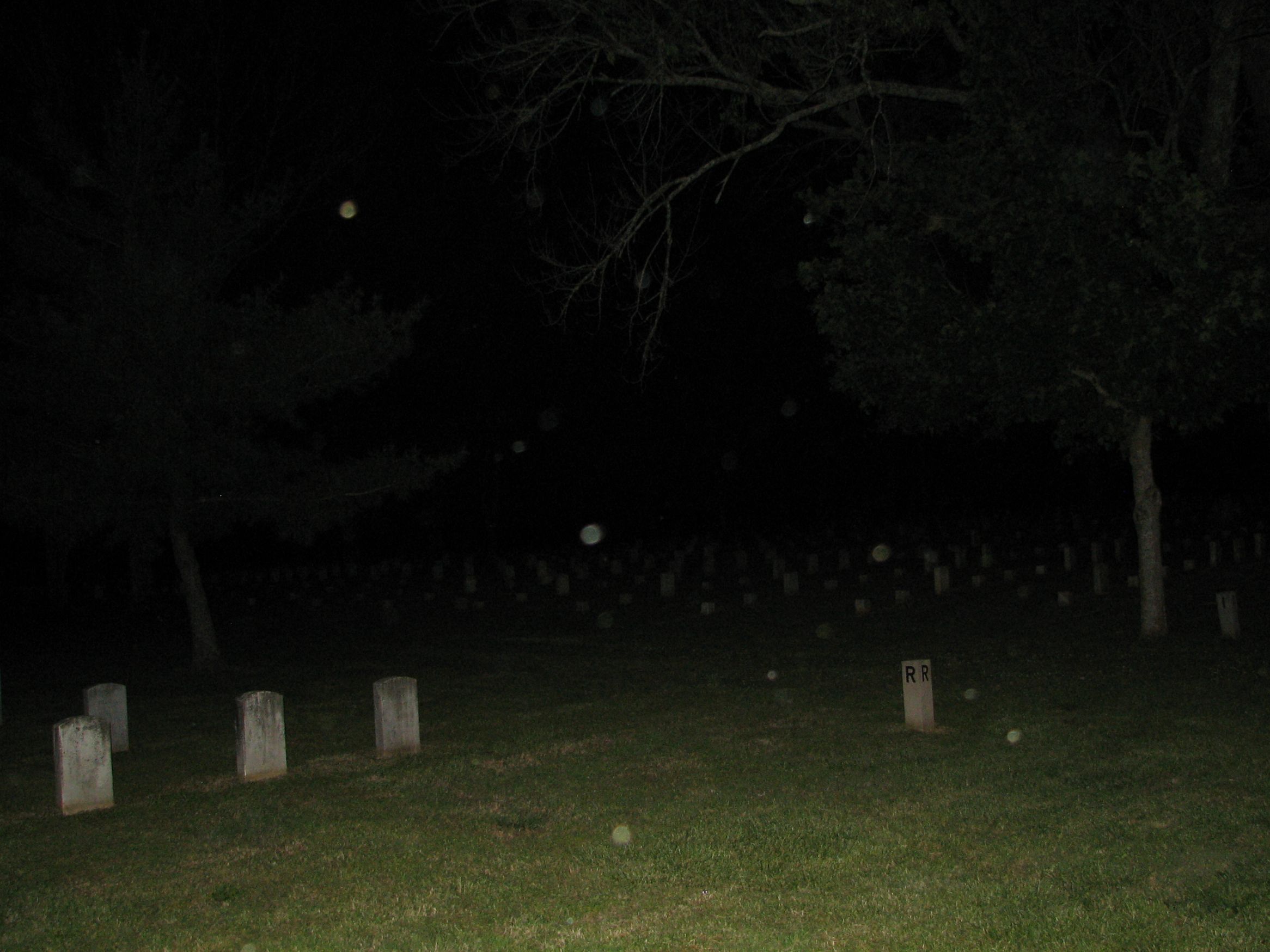
Thousands of Soldiers Are Buried Here
The battlefield's historical connection to death extends beyond the three days of fighting.
Stones River National Cemetery was established during the Civil War and became the final resting place of thousands of Union soldiers.
Beginning in October 1865, soldiers from the 111th United States Colored Infantry worked to locate and rebury Union dead from Stones River, Murfreesboro, and surrounding areas.
The work continued for nearly a year.
According to the National Park Service's updated 2026 cemetery history, 6,124 Union soldiers are buried there.
Many remain unidentified.
The cemetery also contains veterans and family members associated with later conflicts.
These figures should not be confused with the battle's death toll. Soldiers from other locations in Middle Tennessee were also reinterred at Stones River.
The cemetery's history includes another important chapter.
After the fighting, formerly enslaved people and Black Union veterans helped establish a community near the burial grounds.
Known as Cemetery, the settlement included homes, farms, churches, and a school.
The National Park Service preserves this history alongside the battlefield's military significance.
Today, the grounds provide a place to remember the soldiers who died, the people who survived, and the communities that emerged after emancipation.
Why Do Battlefields Attract So Many Ghost Stories?
Battlefields have long been associated with supernatural folklore.
The combination of violent deaths, historic buildings, burial grounds, and emotionally powerful stories can influence how visitors experience a location.
At Stones River, visitors encounter places whose names already describe the horror of the original events.
The Slaughter Pen and Hell's Half Acre were not invented by paranormal investigators.
They originated from the violence of the battle itself.
The preserved landscape also contains natural features that can make ordinary experiences unsettling.
Limestone formations create sudden depressions and uneven terrain.
Dense cedar growth can conceal animals and other visitors.
Wind moving through vegetation may produce sounds whose direction is difficult to determine.
Temperature changes can occur in shaded or low-lying terrain.
Human perception is also influenced by expectation.
Someone visiting a battlefield after hearing stories about phantom soldiers may interpret an indistinct shape or unfamiliar sound differently from someone who knows nothing about the haunting legends.
None of those explanations proves that a particular witness was mistaken.
They establish why an extraordinary interpretation cannot be accepted solely because an experience initially seemed inexplicable.
Despite decades of reported encounters, no independently verified investigation has established that deceased soldiers are physically appearing or communicating with visitors at Stones River.
Can Visitors Explore the Haunted Battlefield?
Stones River National Battlefield is operated by the National Park Service.
The visitor center is located at 3501 Old Nashville Highway, Murfreesboro, Tennessee.
The park preserves several historically important areas, including the Slaughter Pen, Hell's Half Acre, the national cemetery, and portions of the McFadden Farm battlefield.
Visitors can explore the grounds through walking trails, interpretive stops, and scheduled educational programs.
However, the park is not open for unrestricted nighttime ghost hunting.
As of November 2026, the grounds are generally accessible to pedestrians and cyclists from sunrise to sunset.
Vehicle access is subject to seasonal gate schedules.
Winter gate hours begin on November 1, with most gates closing at 4:30 p.m.
After-hours activities require appropriate authorization.
Visitors should remain on permitted routes and avoid disturbing graves, archaeological features, or protected battlefield resources.
The site is a national memorial as well as a location associated with supernatural folklore.
Are the Soldiers of Stones River Still There?
The Battle of Stones River left lasting marks on Murfreesboro.
Thousands of men were killed or wounded.
Families lost relatives.
Survivors carried injuries and memories of the fighting for the rest of their lives.
The battlefield later became a national historic site, while much of the surrounding landscape developed into modern neighborhoods and businesses.
Across several decades, visitors, local residents, former park employees, and paranormal investigators have reported experiences they associate with the dead.
Among the better-known stories are a reenactor who allegedly watched a uniformed figure disappear, a deputy who reported an extraordinary encounter, and a headless horseman linked to the documented death of Julius Garesché.
Some investigators have claimed to record voices and unexplained sounds.
Others have returned with no convincing evidence.
The history of Stones River is not in question. The battle happened, thousands suffered, and the lives lost are documented. Whether those soldiers continue walking the fields of Murfreesboro remains a question of folklore rather than established fact.

Jude Cassian
Jude Cassian tracks the strange, dark, unexplained, and absurd corners of the world with independent curiosity and no political or religious spin.
Suggested Articles You Might Enjoy
Notes from a Prisoner: The Human Insulators
Tattoo types are distinctly categorized. There are regular tattoos, which anyone except the lowest-ranked inmates can get
Are People Mysteriously Vanishing Around America’s Largest Cave Systems?
With over 300 million recreational visitors each year to our national parks and recreational areas it’s not surprising that some individuals vanish from these remote areas
Worst Tornadoes to Hit Tennessee
Almost fifty victims of this cluster died in that twenty-four-hour period in Tennessee alone.
Leave a comment