
AOC Discovers the Monster in Her Kitchen Sink: The Garbage Disposal Incident That Went Viral
A 2019 garbage disposal surprise went viral and reopened a strange chapter of New York City plumbing history.
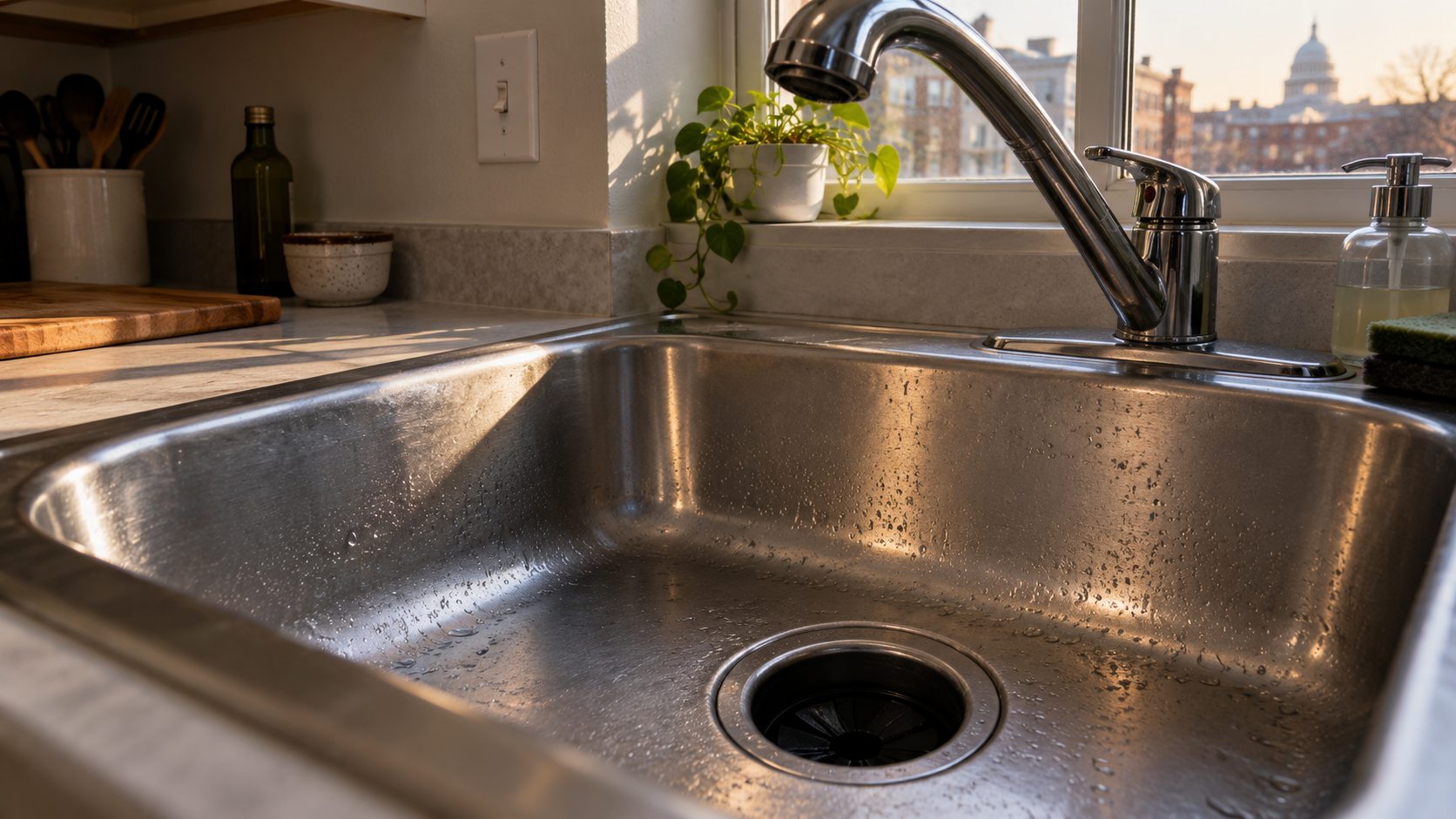
Editorial illustration, not documentary imagery.
In May 2019, Congresswoman Alexandria Ocasio-Cortez encountered an unfamiliar appliance in her Washington, D.C., apartment. When she flipped a switch, a loud grinding noise came from the kitchen sink. Her startled reaction became an internet sensation, generating political commentary, jokes, and an unexpected discussion about why garbage disposals had been banned in New York City for decades.
A Strange Noise Coming From the Kitchen Sink
On May 6, 2019, Alexandria Ocasio-Cortez, then a 29-year-old freshman member of Congress, shared an unusual experience with her Instagram followers.
She had recently moved into an apartment in Washington, D.C., after winning her first congressional election.
While exploring the kitchen, she flipped a switch near the sink.
A loud grinding noise erupted from the drain.
Ocasio-Cortez immediately began recording the appliance, joking that there was a monster living inside her sink.
She explained that she had never encountered such a device in any previous home.
The mysterious appliance was a garbage disposal.
For millions of American homeowners, garbage disposals are an ordinary part of the kitchen. Installed beneath sinks, the motorized devices grind food scraps into small particles that wash into a building's wastewater system.
But Ocasio-Cortez had grown up in New York, where garbage disposals were uncommon.
She began asking her followers what the appliance was supposed to do and why it made such an aggressive noise.
Her reaction was partly humorous, but the questions were genuine.
She wondered whether the machine was intended for food scraps and whether using it was environmentally responsible.
Within hours, the videos had spread well beyond her Instagram audience.
The Garbage Disposal Was Apparently Terrifying
At the time, Ocasio-Cortez had approximately 3.3 million Instagram followers.
Her video showed the sink drain while she operated the switch, reacting to the noise coming from below.
She jokingly described the appliance as a monster and later called it terrifying.
The congresswoman also questioned whether the machine was actually more useful than throwing unwanted food into ordinary garbage.
Her followers quickly began explaining how garbage disposals worked.
Others responded with jokes about an elected official encountering a common household appliance for the first time.
Some people suggested she should reach into the disposal to investigate its contents.
Ocasio-Cortez joked that Republicans offering that advice might be trying to test her health insurance.
The comment was another example of the informal humor she frequently used on social media.
However, putting a hand inside a garbage disposal is not recommended, even when the appliance appears to be switched off.
Manufacturer InSinkErator specifically advises users against reaching into the grinding chamber. Foreign objects should be removed using appropriate tools after the power has been disconnected.
Later, Ocasio-Cortez suspected that something inside the disposal might be contributing to the unusual noise.
She considered contacting her landlord or simply avoiding the appliance.
In a subsequent update on May 7, she said she had unplugged the unit and found nothing inside.
No confirmed mechanical defect was established in the contemporary reporting.
Why Had She Never Seen a Garbage Disposal?
The most interesting part of the story emerged after the videos went viral.
New York City had prohibited the installation of residential garbage disposals in areas served by combined sewer systems for decades.
The restrictions dated back to the 1970s.
City officials were concerned that grinding food waste and flushing it into the sewers would increase pressure on aging wastewater infrastructure.
New York's combined sewer system carries both household wastewater and stormwater through the same pipes.
During heavy rainfall, excess water can overwhelm the system, potentially releasing untreated sewage into surrounding waterways.
Officials feared that adding shredded food scraps would increase the volume of organic material entering the system and complicate wastewater treatment.
The restrictions did not apply identically throughout the city. Certain neighborhoods with separate sewer systems were exempt.
Nevertheless, the policy meant generations of New Yorkers lived in apartments without garbage disposals.
In the 1990s, the city began reconsidering the prohibition.
A Department of Environmental Protection study examined whether the appliances could operate safely within New York's wastewater system.
The study concluded that allowing them would not produce the adverse environmental consequences previously feared.
On September 11, 1997, Mayor Rudy Giuliani signed legislation lifting the restriction.
But legalization did not make garbage disposals common.
Garbage Disposals Remained Rare in New York Apartments
More than two decades after New York lifted its restrictions, garbage disposals were still unusual in the city's housing market.
An August 2018 report by Apartment Therapy examined real estate listings and found that very few advertised having one.
Of approximately 11,000 Manhattan rental listings reviewed, just 56 specifically mentioned a garbage disposal.
Among roughly 7,500 apartments listed for sale, only 144 mentioned the appliance.
These figures measured listing descriptions rather than a complete physical inventory of apartments, but they illustrated how unusual the feature remained.
Some cooperative apartment buildings continued restricting installations, while others had not upgraded plumbing to accommodate the equipment.
Real estate professionals interviewed for the article described garbage disposals as an amenity that could distinguish a listing from competing apartments.
For someone raised in New York, it was therefore entirely possible to reach adulthood without ever using one.
Ocasio-Cortez subsequently explained that the appliances had remained uncommon in her home city after the ban ended.
She also pointed out that other features common in suburban homes, such as in-unit washers and dryers, dishwashers, and central air conditioning, were absent from many New York apartments.
The explanation shifted part of the discussion away from the congresswoman's surprise and toward the differences between urban and suburban housing.
The Internet Turns a Kitchen Appliance Into a Political Story
The videos attracted attention from outlets including Business Insider, The Independent, and Elite Daily.
The reactions were divided.
Some commentators mocked Ocasio-Cortez for being unfamiliar with an everyday appliance.
Others pointed to New York's history of restrictions and argued that her unfamiliarity was understandable.
The discussion quickly expanded beyond the mechanics of a garbage disposal.
It became another example of how ordinary social media posts by public officials can generate national attention.
Political opponents used the videos to question the congresswoman's judgment, while supporters emphasized the fact that New York apartments often lacked the appliances.
Neither reaction changed the underlying facts.
Ocasio-Cortez encountered a device she had not previously used, asked followers about it, and publicly documented her reaction.
The appliance itself was not particularly unusual outside New York City.
The controversy resulted largely from the combination of a recognizable political figure, an ordinary domestic object, and a humorous public reaction.
Was Her Environmental Question Actually Reasonable?
Among Ocasio-Cortez's questions was whether flushing food through a garbage disposal was environmentally sound.
That question involves a genuine waste-management issue.
Garbage disposals do not eliminate food waste. They transfer it from the solid-waste collection system into wastewater infrastructure.
Once ground-up food enters the sewer, it must be transported and processed alongside other wastewater.
Depending on the treatment facility, some organic material may be recovered and used for energy production or other beneficial purposes.
However, wastewater treatment requires energy, and the additional organic material can increase the demands placed on treatment systems.
The U.S. Environmental Protection Agency's food-waste research explains that sending food down the drain is generally less environmentally beneficial than preventing food waste, donating usable food, or recovering nutrients through suitable processing methods.
The environmental outcome also depends on local infrastructure.
A modern treatment facility equipped for anaerobic digestion may recover energy from organic material.
A poorly maintained sewer or septic system may experience additional problems when food waste enters it.
Consequently, there is no universal rule that putting food in a garbage disposal is always better than throwing it away.
The answer depends on how the local community collects and processes waste.
The question raised in the viral video was therefore connected to a legitimate environmental issue, even though the reaction to the appliance was presented humorously.
The Unexpected Connection to Social Mobility
Ocasio-Cortez also used the discovery to joke about social mobility.
In one Instagram post, she questioned whether gaining access to unfamiliar kitchen appliances was a sign of moving into a different economic environment.
The observation reflected differences in housing amenities across American cities.
In many suburban homes, garbage disposals are installed as standard kitchen equipment.
In older, densely populated cities, residents may be more accustomed to communal laundry facilities, limited kitchen space, and mechanical systems that have not been extensively modernized.
Those differences do not necessarily correspond neatly to income.
An expensive Manhattan apartment may lack appliances that are standard in a much less expensive home elsewhere.
The unusual economics of urban housing helped explain why something as ordinary as a garbage disposal could be unfamiliar to a person who had spent years living in New York.
A Very Ordinary Machine Becomes a Viral Mystery
The incident did not involve a dangerous discovery, a mysterious creature, or a paranormal event.
The device beneath the sink was a standard household food-waste disposer.
Nevertheless, the story generated extensive coverage because of the contrast between its ordinary subject and the extraordinary attention it received.
A congresswoman heard a frightening noise, asked the internet what was happening, and discovered that a common kitchen appliance had been largely absent from the homes she knew.
The resulting discussion covered everything from plumbing regulations and environmental policy to apartment amenities and social media culture.
It also revealed an overlooked piece of New York City history: for decades, officials had treated the familiar garbage disposal as a potential threat to the municipal sewer system.
The monster in the kitchen sink turned out to be ordinary plumbing equipment. The stranger part of the story was how a machine most people barely notice became a nationwide talking point.

Jude Cassian
Jude Cassian tracks the strange, dark, unexplained, and absurd corners of the world with independent curiosity and no political or religious spin.
Sources
Suggested Articles You Might Enjoy
“NPC” livestream trend
TikTok creators cash in on the NPC trend, mimicking video game characters for unique livestreams, earning from micro-revenues and engaging audiences.
The Night a Mountain of Garbage Buried a Neighborhood: Ethiopia's Deadly Koshe Disaster
In 2017, the Koshe landfill collapsed onto homes in Addis Ababa. Survivor accounts and later reports reveal the human cost and disputed toll.
The Enfield Horror: A Three-Legged Monster, Six-Toed Footprints, and the Illinois Town That Became a Cryptid Mystery
In 1973, an Illinois man reported a three-legged creature outside his home. A later sociological study examined how the Enfield Horror became an enduring cryptid legend.
Reference
https://www.businessinsider.com/alexandria-ocasio-cortez-freaks-out-over-garbage-disposal-2019-5
Reference
https://www.indy100.com/news/aoc-garbage-disposal-instagram-sink-alexandria-ocasio-cortez-washington-8903736
Reference
https://www.elitedaily.com/p/alexandria-ocasio-cortezs-instagrams-about-her-garbage-disposal-are-way-too-relatable-17554677
Reference
https://www.nyc.gov/html/om/html/97/sp534-97.html
Reference
https://codelibrary.amlegal.com/codes/newyorkcity/latest/NYCadmin/0-0-0-215259
Reference
https://www.apartmenttherapy.com/garbage-disposals-nyc-261145
Reference
https://www.latimes.com/archives/la-xpm-1997-oct-11-mn-41713-story.html
Reference
https://www.epa.gov/sustainable-management-food/wasted-food-scale
Reference
https://www.insinkerator.com/en-us/support/fixing-a-jammed-garbage-disposal