
The Realtor Stalker: How Threatening Phone Calls Across America Exposed Two Cold-Case Murders
Threatening calls to real estate agents led investigators to a DNA link in two Texas cold cases. The suspect died before trial and was never convicted.
A Strange Phone Call in South Carolina
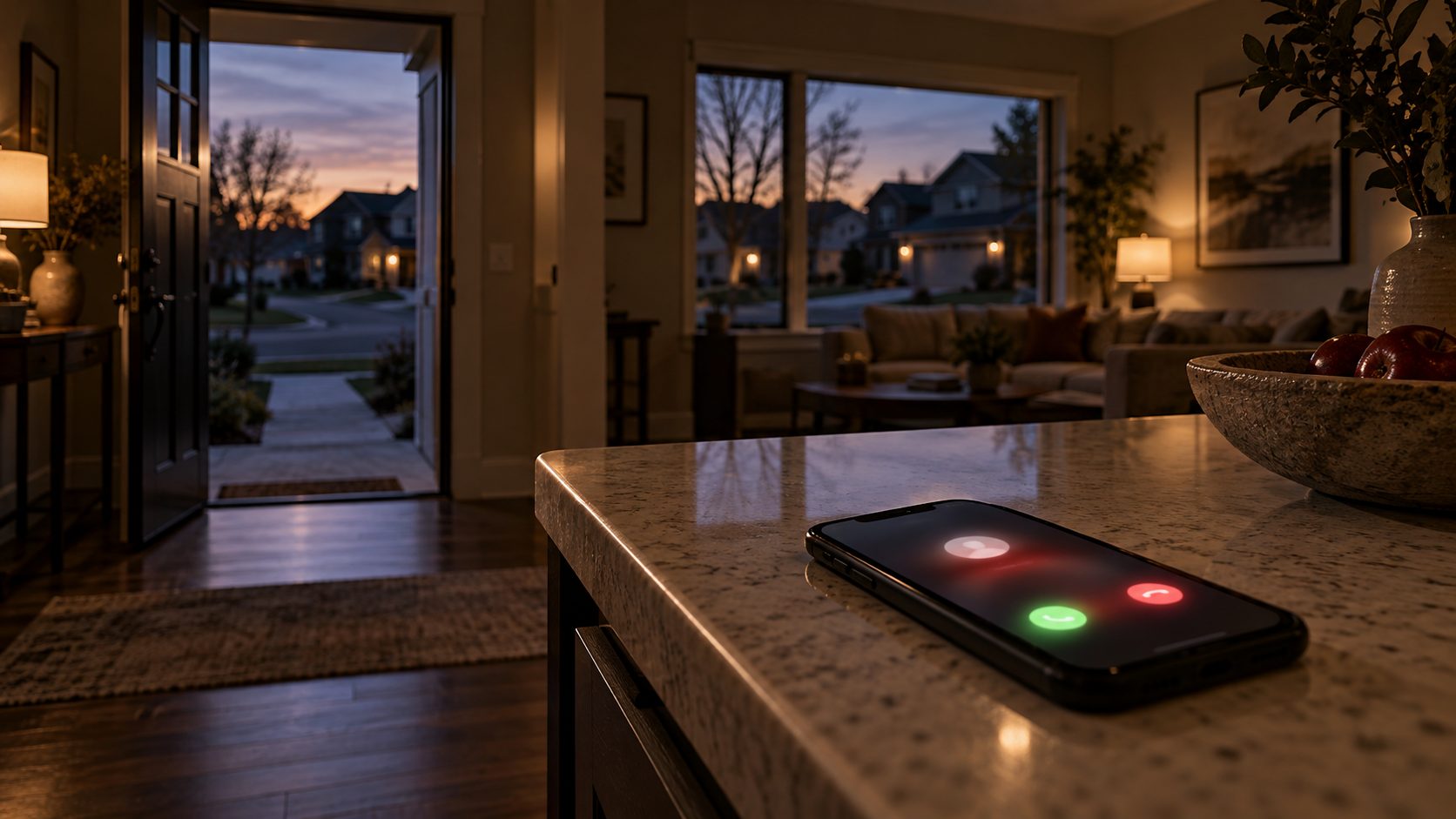
In the spring of 2018, Katie Gambla, a real estate agent in Beaufort, South Carolina, received a phone call from a man claiming to be interested in buying property.
Gambla had been working in real estate for approximately a year. Receiving inquiries from unfamiliar buyers was a normal part of her job. However, this caller seemed more interested in her movements than in purchasing a house.
He asked when she would be at the office and where she would be conducting open houses. When Gambla tried to determine which property interested him, his answers became evasive.
The conversation ended, but the calls continued.
The caller began using different telephone numbers and leaving increasingly disturbing messages. What started as unusual inquiries developed into sexually explicit harassment and threats of physical violence.
Gambla reported the calls to local police. Investigators initially struggled to identify the caller because he was using internet-based telephone services that concealed his actual number and location.
Gambla had no way of knowing whether he was calling from another state or watching her somewhere nearby.
She began changing how she worked. She told others where she would be meeting clients, avoided parking in driveways where another vehicle could block her exit, and sometimes brought her boyfriend or another agent to appointments.
Those precautions became part of her routine.
The person behind the calls, investigators would later establish, was Andy Castillo, a man living approximately 1,400 miles away in Lubbock, Texas.
Female Realtors Were Being Targeted Across America
Gambla was far from the only woman receiving threatening calls.
Across the United States, female real estate agents reported similar experiences involving anonymous callers, sexually explicit messages, intimidation, and repeated attempts to contact them.
The scale became clearer during an investigation in McLennan County, Texas.
Sheriff Parnell McNamara reported in January 2020 that similar incidents appeared to have occurred in approximately 20 cities across 10 states. Later accounts placed the number of affected agents above 120. A 2022 Investigation Discovery promotional report described hundreds of calls reaching agents in at least 12 states and 20 cities.
The exact totals varied between reports, but the pattern was national.
Investigators examined possible connections to reports from several locations, including Arizona, California, Florida, Louisiana, Nevada, New York, South Carolina, Texas, Washington state, and Washington, D.C.
The caller could contact women in different cities without traveling to those locations. Internet calling services allowed him to present unfamiliar or disguised telephone numbers, complicating attempts to block him or determine where he was located.
Real estate agents were particularly accessible targets because their professional photographs, names, telephone numbers, and working locations were often publicly available.
The harassment also extended beyond telephone conversations.
The Threats Against Children
In the Waco, Texas, area, approximately six female real estate agents reported particularly disturbing messages.
According to investigators, the women received sexually explicit photographs and messages from unidentified telephone numbers.
Some messages included photographs of their children, apparently obtained from social media accounts.
The images were accompanied by threats describing sexual violence against the children.
This introduced a more dangerous dimension to the investigation. The sender was apparently using publicly accessible personal information to make threats appear credible and personal.
Even without being physically present, he could demonstrate knowledge of his targets' families.
The McLennan County Sheriff's Office began investigating the harassment, with Detective Joseph Scaramucci and the department's human trafficking investigators taking part.
Authorities eventually identified Castillo as a suspect and traced the activity to Lubbock.
On January 6, 2020, investigators arrested him at a residence in the city. Local reporting indicated that he was caught while sending obscene messages.
Castillo, then 56, initially faced a criminal solicitation charge related to aggravated sexual assault of a child. He was subsequently charged with stalking.
His arrest appeared to bring an extensive cyberstalking investigation closer to resolution.
However, the most significant discovery was still ahead.
DNA Evidence Connected Castillo to a 2003 Murder
Nearly 17 years before Castillo's arrest, investigators in Lubbock County had discovered the body of a young woman on a rural road.
On July 15, 2003, 21-year-old Cynthia Joann Palacio was found partially clothed on a caliche road in southeastern Lubbock County, near Slaton, Texas.
She had been strangled.
Palacio was the mother of a two-year-old daughter. Her killing remained unsolved despite years of investigative work and attempts to generate new information.
Forensic evidence had been preserved from the original investigation, including biological material collected from her body and other evidence associated with the crime scene.
Then, on April 19, 2004, another 21-year-old woman, Linda Trevino Carbajal, was found dead on a rural dirt road in northern Lubbock County.
Carbajal had also been strangled and had suffered blunt-force injuries.
The two women had known each other and had been roommates.
Investigators connected the two homicides through forensic evidence, but neither case produced a successful prosecution for many years.
In 2018, the Texas Department of Public Safety was still seeking tips concerning Palacio's murder and publicizing a reward.
A breakthrough finally came after Castillo's arrest in the real estate harassment investigation.
Police had obtained a DNA sample from him during the 2020 investigation. That sample was entered into the Combined DNA Index System, commonly known as CODIS, which allows investigators to compare DNA profiles associated with criminal cases.
A database alert linked Castillo to evidence in the Palacio investigation.
According to reporting based on court documents, biological evidence had been recovered from Palacio's thigh, beneath her fingernails, and from clothing and jewelry.
The DNA match gave investigators a new suspect in a homicide that had remained unresolved since 2003.
A Second Murder Charge
On September 3, 2020, Castillo was served with an arrest warrant in connection with Cynthia Palacio's murder.
The following day, the Texas Department of Public Safety announced the breakthrough publicly.
The agency confirmed that a CODIS alert had led the Texas Rangers and Lubbock County Sheriff's Office to focus their investigation on Castillo.
At that stage, Palacio's killing was linked to Carbajal's 2004 death, but investigators were continuing to develop the second case.
The investigation progressed further.
On December 1, 2020, a Lubbock County grand jury indicted Castillo on a capital murder charge involving the deaths of both women.
It was a dramatic expansion of the original criminal investigation.
A man arrested following complaints from female real estate agents across the country was now accused of killing two women years before those calls began.
The DNA evidence was central to the murder case. However, a forensic match and a grand jury indictment are not the same as a criminal conviction.
Castillo was awaiting trial, and prosecutors had not yet presented the murder allegations to a trial jury.
Andy Castillo Died Before Facing Trial
On August 27, 2021, Andy Castillo died at University Medical Center in Lubbock while still in custody.
He was 58 years old.
His cause of death was initially undisclosed. In November 2021, authorities confirmed that he had died from COVID-19.
His death ended the possibility of prosecuting him for the two murders.
Castillo never stood trial for the deaths of Cynthia Palacio and Linda Carbajal, and he was never convicted of killing them.
The Texas Rangers' cold-case database subsequently classified both investigations as solved, identifying Castillo as the suspect and documenting the DNA connection. The official records also acknowledge that he died while awaiting trial.
That distinction is important. Investigators concluded that their evidence had identified the person responsible, but the cases did not result in judicial findings of guilt.
What Remains Unanswered?
Several questions remained unresolved after Castillo's death.
Investigators never established through a completed trial the full circumstances surrounding the killings of Palacio and Carbajal, including the precise sequence of events or motive.
The public record also does not definitively establish how many real estate agents Castillo contacted over the years.
Although the harassment investigation involved numerous cities and states, authorities did not establish that Castillo had physically attacked any of the real estate agents he threatened.
Likewise, the discovery of DNA evidence linking him to the earlier murders does not establish that he committed additional homicides.
Nevertheless, the connection between the two investigations was significant.
The real estate agents' complaints led to Castillo's arrest. His DNA then provided the forensic lead that investigators had been missing in the two Lubbock killings.
Without the harassment investigation, the 2003 and 2004 cases might have remained unresolved for considerably longer.
How the Case Changed Realtor Safety Awareness
Katie Gambla later discussed her experience in a 2022 interview with Chicago Agent Magazine.
By then, her business had become more dependent on referrals and established clients rather than unsolicited inquiries.
She encouraged newer agents to verify prospective clients before agreeing to private property showings.
The National Association of Realtors similarly recommends meeting unfamiliar clients in public locations, sharing appointment information with trusted contacts, avoiding open houses alone, and limiting personal information available online.
These measures cannot eliminate every risk, but they address vulnerabilities that the Castillo investigation exposed.
The case received national attention when Investigation Discovery featured it in the May 26, 2022, premiere episode of Devil in the Web, titled Cyber-Stalker.
What initially looked like a disturbing but geographically isolated series of phone calls turned out to involve a suspect across multiple criminal investigations.
The women reporting those calls had no reason to know about two unsolved murders in Texas.
Their complaints nevertheless helped authorities uncover evidence in both cases.
The most disturbing part of the story is not simply that a stranger was threatening real estate agents across America. It is that the man investigators identified had also been linked through DNA to two killings committed years before the calls began.

Jude Cassian
Jude Cassian tracks the strange, dark, unexplained, and absurd corners of the world with independent curiosity and no political or religious spin.
Sources
Suggested Articles You Might Enjoy
The Beverly Carter Murder: A Fake Home Showing That Ended in Kidnapping and Death
A fake buyer appointment led Arkansas real estate agent Beverly Carter into a planned kidnapping. Court records reveal the ransom scheme, investigation, and convictions.
The Enfield Horror: A Three-Legged Monster, Six-Toed Footprints, and the Illinois Town That Became a Cryptid Mystery
In 1973, an Illinois man reported a three-legged creature outside his home. A later sociological study examined how the Enfield Horror became an enduring cryptid legend.
The Devil House of Bolivia: A Home Covered in Demons Terrifies Neighbors, but Its Owner Says They Protect Him
David Choque covered his El Alto home with horned sculptures tied to Andean mining traditions. Neighbors feared occult activity, but the allegations were never substantiated.
Reference
https://chicagoagentmagazine.com/2022/08/01/how-to-stay-safe-while-working-with-clients-a-cautionary-tale-about-cyber-stalking/
Reference
https://www.kcbd.com/2020/01/06/lubbock-man-charged-with-cyber-stalking-female-real-estate-agents-across-texas/
Reference
https://www.kbtx.com/content/news/Man-accused-of-cyber-stalking-Central-Texas-real-estate-agents-566790841.html
Reference
https://www.kwtx.com/content/news/New-charge-filed-in-local-real-estate-agent-cyber-stalking-case-567052091.html
Reference
https://www.dps.texas.gov/news/arrest-made-17-year-old-lubbock-county-cold-case
Reference
https://www.dps.texas.gov/apps/coldCase/Home/Details/39
Reference
https://www.dps.texas.gov/apps/coldCase/Home/Details/40
Reference
https://www.kcbd.com/2020/12/01/castillo-indicted-charged-with-capital-murder-cynthia-palacios-death/
Reference
https://www.kcbd.com/2021/08/30/accused-murderer-cynthia-palacio-linda-carbajal-dies-jail/
Reference
https://www.dailymotion.com/video/x8b4zfh
Reference
https://www.nar.realtor/safety